
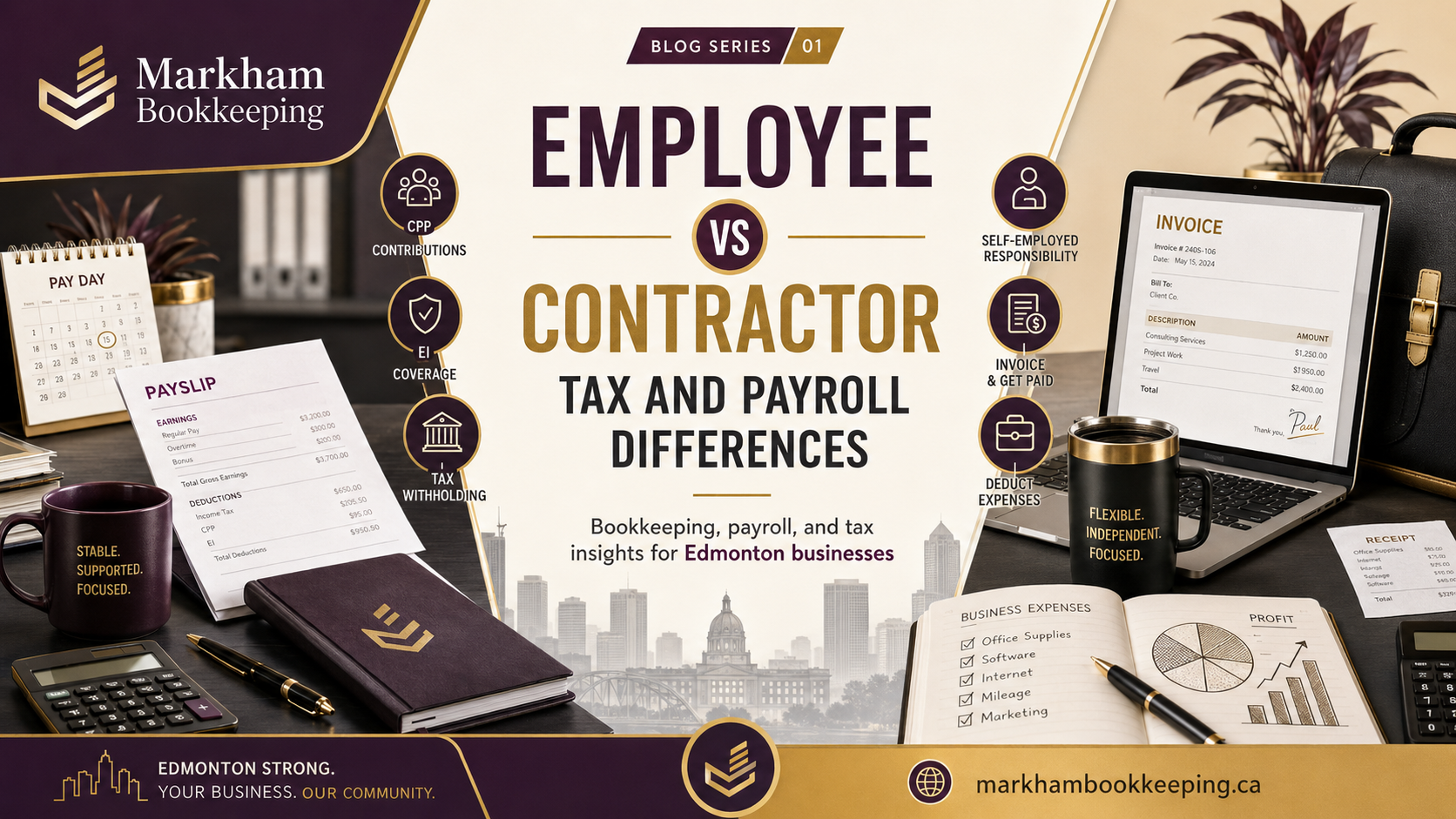
Hiring help is exciting for a growing business, but one of the first questions every owner should ask is: should this person be treated as an employee or an independent contractor? For Edmonton small businesses, this decision affects payroll, bookkeeping, accounting, tax filings, cash flow, and CRA compliance.
Many business owners think the answer depends only on what the contract says. For example, if the agreement says “contractor,” they assume the worker is automatically self-employed. In reality, the working relationship matters more than the title. CRA generally looks at the overall facts: who controls the work, who provides tools, who carries financial risk, whether the worker can profit or lose money, and whether the worker is truly operating an independent business.
This distinction is important because the tax and payroll treatment is very different.
What Happens When a Worker Is an Employee?
If a worker is an employee, the business becomes responsible for payroll. That means the employer must calculate and deduct Canada Pension Plan contributions, Employment Insurance premiums, and income tax from the employee’s pay. The employer must also contribute the employer portion of CPP and EI and remit the required amounts to CRA.
From a bookkeeping point of view, employee wages are usually recorded through payroll. The business must track gross wages, employee deductions, employer contributions, vacation pay, benefits, taxable allowances, and payroll liabilities. Clean payroll accounting is important because the numbers must agree with T4 slips, remittance records, payroll reports, and the general ledger.
For example, if an Edmonton retail store hires a part-time employee, the business does not simply pay the worker the full hourly amount and record it as a contractor expense. The payroll must be processed properly. The employee receives net pay after deductions, and the business records both the wage expense and the payroll amounts owed to CRA.
This is why monthly bookkeeping matters. If payroll deductions are posted incorrectly, the balance sheet may show wrong payroll liabilities. If wages are entered manually without proper backup, year-end T4 preparation can become messy. A small payroll mistake repeated every pay period can create a large cleanup job later.
What Happens When a Worker Is a Contractor?
A contractor is generally treated as self-employed. The business usually pays the contractor based on an invoice. Instead of running payroll, the business records the invoice as an expense, such as subcontractor expense, professional fees, repairs and maintenance, consulting fees, or another suitable expense category.
The contractor is normally responsible for their own income tax. Depending on their business situation, they may also need to register for GST/HST, charge tax on invoices, file GST/HST returns, track expenses, and manage their own bookkeeping.
For the hiring business, the accounting looks simpler at first. The contractor sends an invoice, the business pays it, and the expense is recorded. But simple does not always mean risk-free. If the relationship looks like employment, CRA may later question whether the worker should have been on payroll. If that happens, the business could face unexpected payroll obligations, interest, penalties, and messy accounting corrections.
Why Misclassification Creates Tax Problems
The biggest issue with employee vs contractor classification is that business owners sometimes choose contractor status only to avoid payroll costs. A contractor arrangement may reduce administrative work in the short term, but if the worker is effectively acting like an employee, the savings may not hold up.
For example, suppose a bookkeeping firm, restaurant, trades company, or Edmonton contractor hires someone full-time, controls their schedule, provides all tools, requires them to work only for that business, and pays them regularly like staff. Even if the worker submits invoices, the facts may still suggest an employment relationship.
This can create several tax and finance problems:
The business may not have deducted income tax, CPP, or EI.
The business may not have paid the employer portion of CPP and EI.
The books may show contractor expense when the amount should have been payroll expense.
Payroll remittance reports may not match the real staffing arrangement.
The contractor may not have filed or saved properly for income tax.
GST/HST may have been charged incorrectly or not charged when required.
These problems can affect both sides. The business may need accounting cleanup, payroll corrections, amended filings, or support responding to CRA. The worker may also face tax surprises if they did not understand their self-employed obligations.
Bookkeeping Differences: Employee vs Contractor
From a bookkeeping perspective, employees and contractors should not be treated the same.
Employee costs often include wages, employer CPP, employer EI, vacation pay, benefits, workers’ compensation, bonuses, commissions, and payroll remittance liabilities. These should be tracked carefully so financial statements show the true cost of labour.
Contractor costs are usually recorded through accounts payable or direct expense entries. The invoice should include proper details, such as the contractor’s legal name, business number if applicable, description of work, invoice date, GST/HST if charged, and payment terms.
For Edmonton businesses, labour costs can be a major part of monthly finance reporting. If employee payroll and contractor costs are mixed together, the owner may not understand the real cost of operations. Clean accounting helps answer important questions: How much does labour cost as a percentage of revenue? Are contractors being used for project work or regular staffing? Are payroll liabilities current? Are GST/HST amounts recorded properly?
How to Reduce Risk
The best approach is to decide worker status before payments begin. Business owners should review the working arrangement, not just the contract wording. Ask practical questions:
Who decides how and when the work is done?
Can the worker hire helpers?
Does the worker use their own tools or equipment?
Does the worker have multiple clients?
Can the worker make a profit or suffer a loss?
Is the worker integrated into the business like staff?
If the answer is unclear, it is worth getting advice before the arrangement grows. A contractor setup that works for a short project may not work for a long-term, controlled, full-time role.
Final Thoughts
Employee vs contractor status is more than a payroll label. It affects tax compliance, bookkeeping accuracy, accounting reports, CRA risk, and business cash flow. Edmonton business owners should not make the decision only based on convenience or short-term savings.
If your books show a mix of payroll, subcontractors, casual labour, and owner payments, it may be time for a review. Clean bookkeeping can help you understand what has been paid, how it was recorded, and whether anything needs to be corrected before year-end.
Markham Bookkeeping helps small businesses with bookkeeping, payroll, accounting cleanup, GST/HST support, and practical financial reporting. If you are unsure whether your worker payments are being recorded properly, a review now can prevent bigger problems later.