Running a business in Edmonton South comes with enough daily pressure: customers, staffing, sales, rent, inventory, payroll, CRA deadlines, and unexpected expenses. Bookkeeping often gets pushed to the side because it does not always feel urgent in the moment. But when month-end arrives, messy books can quickly turn into cash flow confusion, missed deductions, GST filing problems, payroll errors, and stress at tax time.
Whether you operate a small retail shop, consulting business, contractor service, clinic, restaurant, auto-related business, e-commerce store, or local professional service in Edmonton South, monthly bookkeeping is one of the best habits you can build. Clean books help you understand where your money is going, what your business is earning, what you owe, and what decisions you should make next.
This monthly bookkeeping checklist is designed for Edmonton South business owners who want a simple, repeatable system. It also explains when it may be time to work with a professional bookkeeper, accountant, or bookkeeping service in Edmonton South.
Why Monthly Bookkeeping Matters for Edmonton South Businesses
Many small business owners only think about bookkeeping when tax season arrives. The problem is that by then, the books may already be months behind. Receipts may be missing, bank transactions may be unclear, payroll remittances may be late, and GST/HST filings may become more complicated than necessary.
Monthly bookkeeping gives you control. Instead of guessing whether the business is profitable, you can review actual numbers. Instead of scrambling before a CRA deadline, you can stay organized throughout the year. Instead of making decisions based only on your bank balance, you can use proper financial reports.
For Edmonton South businesses, this is especially important because many local companies operate with tight margins. Rent, wages, fuel, supplier costs, insurance, advertising, loan payments, and software subscriptions can add up quickly. A business may look busy but still have weak cash flow. Monthly bookkeeping helps you catch these issues early.
A good Edmonton South bookkeeper can help organize your records, reconcile your bank accounts, categorize expenses, track GST, manage payroll entries, and prepare accurate reports. But even if you handle your own books, following a monthly checklist can make a big difference.
1. Collect and Organize All Receipts and Invoices
The first step in your monthly bookkeeping checklist is simple: gather all your documents.
This includes:
Invoices sent to customers, supplier bills, receipts, bank statements, credit card statements, loan statements, payroll records, merchant processor reports, e-transfer records, and any cash expense details.
For business owners in Edmonton South, common expenses may include office rent, vehicle expenses, parking, fuel, supplies, advertising, software, meals, subcontractors, equipment, repairs, phone bills, internet, insurance, and professional fees.
The key is not just collecting receipts but organizing them properly. If you wait too long, it becomes difficult to remember what an expense was for. A $87.42 transaction from a supplier may make sense today, but three months later it may be hard to explain.
Using tools like Dext, Hubdoc, QuickBooks Online receipt capture, or a simple cloud folder can help. The goal is to keep proof for business expenses in case you ever need to support your deductions.
2. Review Bank and Credit Card Transactions
Your bank feed is the foundation of your bookkeeping. Each month, review every business bank and credit card transaction. Make sure each transaction is recorded in the right category.
This step helps avoid common bookkeeping mistakes such as:
Personal expenses recorded as business expenses, duplicate transactions, missing deposits, payments posted to the wrong vendor, loan payments recorded fully as expenses, GST entered incorrectly, and transfers recorded as income.
Many Edmonton South small businesses use multiple payment methods: debit, credit card, e-transfer, cash, Stripe, Square, PayPal, Clover, Shopify, or direct deposit. Each payment source needs to be reviewed carefully.
A professional bookkeeping service in Edmonton South can help ensure that income is not duplicated when payments flow through multiple platforms. For example, if Shopify deposits funds into your bank account, you do not want to record both the full Shopify sales and the bank deposit as separate income. That can overstate revenue.
3. Reconcile Bank Accounts
Bank reconciliation is one of the most important monthly bookkeeping tasks. It means matching your accounting records to your actual bank statement.
If your books say the bank balance is $25,000 but the actual bank statement says $21,400, something is wrong. The difference may be due to missing transactions, duplicate entries, uncleared cheques, merchant fees, bank charges, loan payments, or timing issues.
Every Edmonton South business owner should reconcile bank and credit card accounts monthly. This keeps your books reliable and helps catch problems early.
Bank reconciliation also helps prevent fraud, errors, and missed charges. If an unauthorized withdrawal, duplicate supplier payment, or incorrect fee appears, you are more likely to catch it quickly.
Clean reconciliations are also important if you work with an accountant for year-end tax preparation. When bank accounts are reconciled monthly, year-end accounting becomes smoother and less expensive.
4. Check Accounts Receivable
Accounts receivable means money customers owe you. If you invoice customers but do not collect quickly, your business can run into cash flow problems.
Each month, review your unpaid invoices. Look for invoices that are overdue by 15, 30, 60, or 90 days. The longer an invoice remains unpaid, the harder it may become to collect.
For service businesses in Edmonton South, accounts receivable can quietly become a major problem. You may be busy doing work, but if customers are not paying on time, your bank account may not reflect your sales.
Your monthly checklist should include:
Reviewing unpaid invoices, sending reminders, following up with overdue customers, applying payments correctly, writing off uncollectible amounts only when appropriate, and checking if deposits or retainers were recorded correctly.
Good bookkeeping helps you separate sales from actual cash collected. This is important because profit and cash flow are not always the same thing.
5. Review Accounts Payable
Accounts payable means bills your business owes to suppliers, contractors, landlords, lenders, or service providers.
Each month, review unpaid bills and upcoming due dates. This helps you avoid late fees, damaged supplier relationships, missed payments, and cash flow surprises.
For Edmonton South businesses, accounts payable may include rent, utilities, inventory suppliers, subcontractors, repairs, insurance, software, phone, advertising, professional services, and CRA payments.
A monthly accounts payable review helps you answer important questions:
What bills are due soon?
Can we pay suppliers on time?
Are there old unpaid bills sitting in the system?
Were any bills entered twice?
Are bill payments matched properly?
Are we claiming GST correctly where applicable?
This step is especially useful for businesses that manage multiple vendors or have seasonal cash flow changes.
6. Review Payroll and Source Deductions
If you have employees, payroll must be handled carefully. Payroll errors can create CRA issues, employee frustration, and year-end problems.
Each month, review wages, salaries, vacation pay, bonuses, taxable benefits, deductions, employer CPP, employer EI, and payroll remittances. Make sure payroll amounts in your bookkeeping software match your payroll provider or payroll records.
For Edmonton South employers, payroll bookkeeping should include proper recording of:
Gross wages, CPP contributions, EI premiums, income tax deductions, employer portions, vacation pay payable or paid, benefits, reimbursements, and payroll remittances to CRA.
You should also confirm that CRA payroll remittances are made on time. Late payroll remittances can result in penalties and interest.
A bookkeeper or accountant in Edmonton South can help you keep payroll entries clean and make sure payroll liabilities are not sitting incorrectly on your balance sheet.
7. Track GST/HST Properly
GST/HST tracking is one of the most common bookkeeping trouble spots for Canadian businesses. In Alberta, businesses generally charge 5% GST if they are registered and making taxable supplies. But not every transaction is simple.
Each month, review GST collected on sales and GST paid on eligible business expenses. This helps make GST filing easier and reduces the risk of errors.
Common GST bookkeeping issues include:
Claiming GST on expenses without proper receipts, claiming GST on non-GST items, forgetting GST on sales, mixing exempt and taxable sales, recording supplier bills incorrectly, and not reconciling the GST payable account.
For businesses in Edmonton South, GST can become more complex if you sell online, deal with customers in different provinces, operate as a contractor, or have both taxable and exempt revenue.
A monthly GST review allows you to catch issues before filing time. It also helps you avoid a surprise balance owing to CRA.
8. Separate Owner Draws, Loans, and Personal Expenses
Many small business owners accidentally mix personal and business transactions. This is one of the fastest ways to make bookkeeping messy.
Each month, review transactions involving the owner. Are there personal purchases on the business card? Did the owner transfer money into the business? Did the business pay for personal expenses? Did the owner take draws? Were shareholder loans recorded properly?
These transactions are not always income or expenses. Some may belong to shareholder loan, owner contribution, owner draw, or due to/from shareholder accounts.
For incorporated businesses in Edmonton South, this is especially important. Mixing personal and business expenses can create confusion for corporate tax, shareholder loan balances, and financial reporting.
A professional bookkeeper can help classify these transactions properly so your accountant does not have to spend extra time cleaning them up later.
9. Review Your Profit and Loss Report
Once transactions are entered and reconciled, review your Profit and Loss report. This report shows your revenue, expenses, and profit for the month.
Do not just look at the final profit number. Review the details.
Ask yourself:
Did sales increase or decrease?
Are expenses higher than expected?
Did advertising produce results?
Are wages too high compared to revenue?
Are meals, fuel, supplies, or subcontractor costs increasing?
Is gross profit healthy?
Are there unusual expenses this month?
For Edmonton South business owners, this report can help with pricing, budgeting, staffing, and planning. It can also reveal problems that are not obvious from the bank balance alone.
For example, your bank account may look healthy because you received a loan or collected old invoices. But your Profit and Loss report may show that the current month was not actually profitable.
10. Review the Balance Sheet
Many business owners ignore the balance sheet, but it is one of the most important reports in bookkeeping.
Your balance sheet shows assets, liabilities, and equity. It includes bank balances, accounts receivable, inventory, loans, credit cards, GST payable, payroll liabilities, shareholder loans, and retained earnings.
Each month, scan your balance sheet for unusual balances.
Look for:
Negative bank accounts, old receivables, old payables, GST payable that does not make sense, payroll liabilities not clearing, loan balances not matching statements, shareholder loan balances growing unexpectedly, and clearing accounts with old amounts.
A clean balance sheet means your books are more reliable. A messy balance sheet usually means problems are building up behind the scenes.
11. Compare Actual Results to Your Budget
If you have a budget, compare actual results to your plan. If you do not have a formal budget, even a simple monthly target can help.
For example, you can compare actual revenue, wages, rent, advertising, vehicle expenses, software, subcontractors, and profit to your expected amounts.
This is helpful for Edmonton South businesses that want to grow without losing control of costs. If advertising costs are increasing but sales are not improving, you need to know. If payroll is growing faster than revenue, you need to review staffing or pricing. If supplier costs are rising, you may need to adjust margins.
Monthly bookkeeping turns your financial data into business decisions.
12. Back Up Records and Prepare for Tax Time
At the end of each month, make sure your documents are backed up. Keep digital copies of receipts, invoices, bank statements, payroll reports, GST filings, and important agreements.
This habit makes year-end tax preparation much easier. It also helps if CRA ever asks for support.
For Edmonton South business owners, organized records can save time, reduce accounting fees, and lower stress. Instead of searching through emails, drawers, and bank statements at year-end, you will already have a clean monthly system.
When Should You Hire a Bookkeeper in Edmonton South?
You may be able to manage bookkeeping yourself when the business is small. But as transactions increase, bookkeeping can become harder to keep up with.
It may be time to hire a bookkeeping service in Edmonton South if:
You are months behind, GST filings are stressful, payroll is becoming complicated, you do not trust your reports, your accountant keeps asking for corrections, you are mixing personal and business expenses, you do not know if you are profitable, or you simply do not have time to manage the books properly.
A good Edmonton South bookkeeper does more than enter transactions. They help you maintain clean records, understand your numbers, avoid common mistakes, and stay prepared for tax deadlines.
Final Thoughts
Monthly bookkeeping is not just an admin task. It is a business control system. When your books are clean, you can make better decisions, manage cash flow, prepare for taxes, and understand the real health of your business.
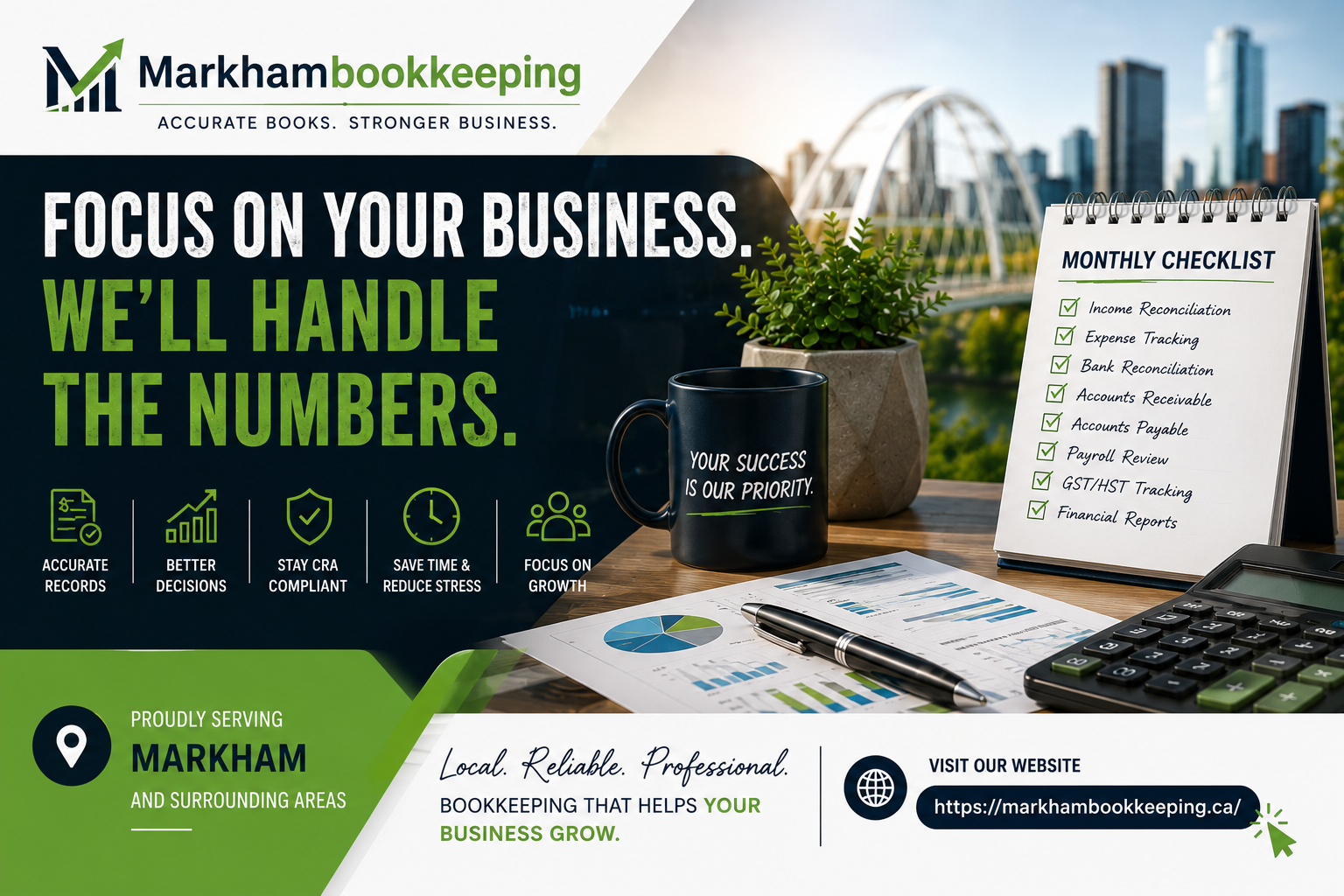
For business owners in Edmonton South, a monthly checklist can prevent small issues from becoming major problems. Start with receipts, bank transactions, reconciliations, receivables, payables, payroll, GST, owner transactions, and financial reports. Do this every month, and your year-end will become much easier.
If your books are behind or your reports do not make sense, professional bookkeeping services in Edmonton South can help you clean things up and stay organized going forward.