
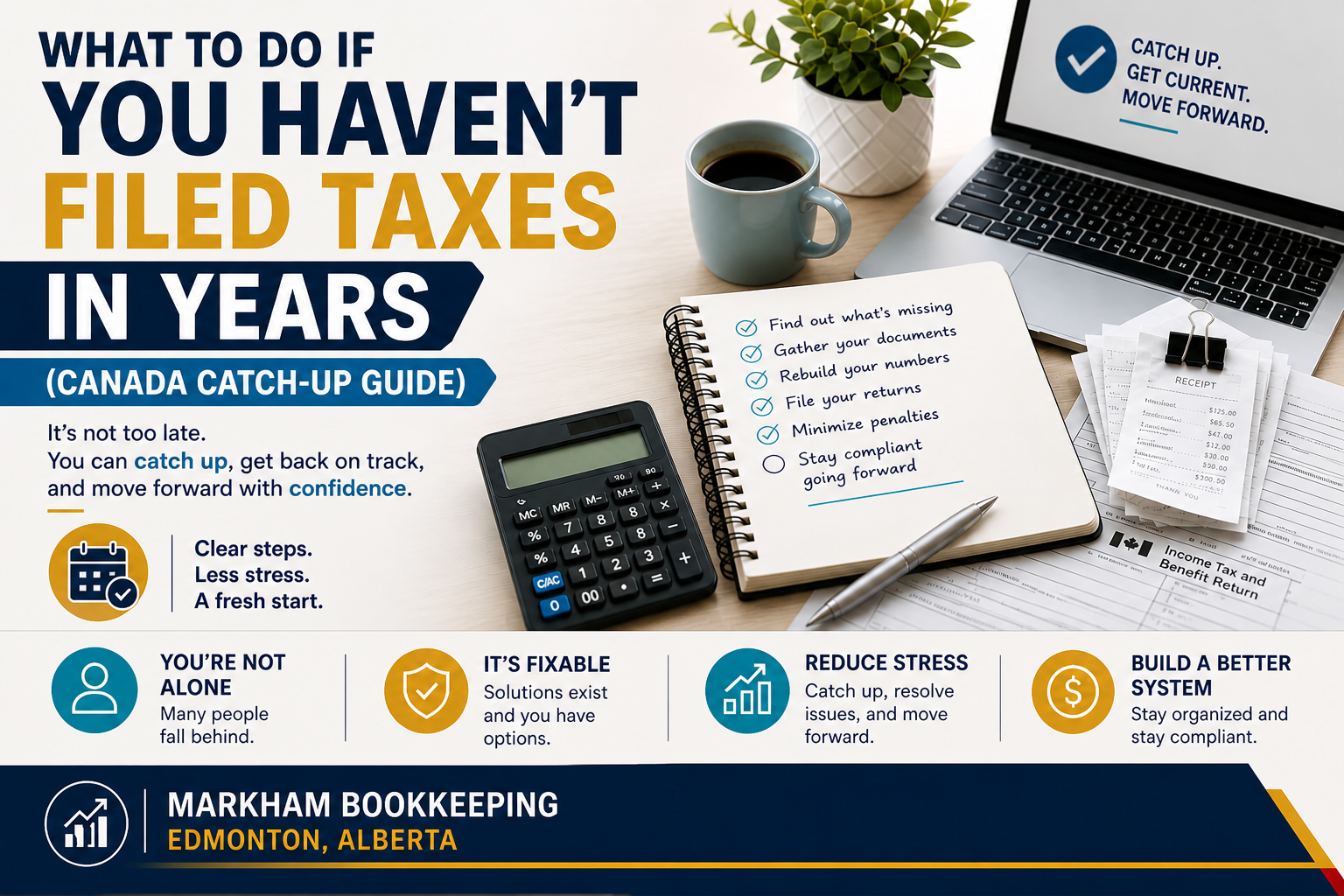
Tax season comes and goes every year—and every year, someone tells me, “I haven’t filed in a few years… I don’t even know where to start.”
If that’s you, you’re not alone.
One missed year turns into two, then three, and suddenly it feels too late to fix.
But here’s the truth:
It’s not too late—and it’s completely fixable.
This guide walks you through exactly how to catch up on your taxes in Canada, in plain English, without overwhelm.
First: Don’t Ignore It
The Canada Revenue Agency already has more information about you than you think.
Your income is often reported by employers, banks, and payment platforms—even if you never filed.
Ignoring taxes doesn’t stop the problem—it only delays it.
The upside? You can still fix everything, reduce penalties, and in some cases even get money back.
Step 1: Find Out What You’ve Missed
Start by getting clarity on your situation.
You can’t fix what you don’t understand.
Check the last year you filed, identify whether you had employment or self-employment income, and confirm if GST/HST applies to you.
Logging into your CRA account will quickly show what’s missing and what’s already reported.
Step 2: Gather Your Documents (Even If They’re Messy)
This step feels overwhelming—but it doesn’t have to be.
You don’t need perfect records—you need usable ones.
Bank statements, credit cards, invoices, and payment platform reports are enough to rebuild your numbers.
Even if receipts are missing, patterns in your transactions can still tell the story.
Step 3: Rebuild Your Numbers Properly
This is the step that actually determines how much you owe—or how much you get back.
Bad bookkeeping leads to bad tax outcomes.
You need to reconstruct income, categorize expenses correctly, and separate personal and business transactions.
Most people either miss deductions or report incorrect numbers—which usually means overpaying.
Step 4: File Your Returns (In Order)
Once your numbers are ready, you can start filing.
Always file from the oldest year forward.
Earlier returns affect later ones, so the order matters more than people think.
Take it step by step—this is a process, not a one-day fix.
Step 5: Understand the Penalties
This is where most people panic—but it’s usually not as bad as they expect.
You only pay penalties if you owe taxes.
If you’re due a refund, there’s no penalty at all.
Interest builds over time, but it’s often manageable once you actually calculate it instead of guessing.
Step 6: Use the Voluntary Disclosures Program (If Needed)
If you’ve missed multiple years or didn’t report income, there’s still a way to fix it cleanly.
The Voluntary Disclosures Program can reduce or eliminate penalties—but only if you act before CRA contacts you.
Timing is everything here.
Step 7: Set Up a Payment Plan
If you owe money, you don’t need to pay everything at once.
CRA prefers cooperation over avoidance.
As long as you file and communicate, payment arrangements are usually available.
Ignoring the balance creates problems—working with it creates solutions.
Step 8: Don’t Overlook GST/HST
This is where things can get serious quickly for business owners.
If you crossed $30,000 in revenue, GST/HST isn’t optional—it’s required.
Failing to register or file can lead to additional liabilities beyond income tax.
This part needs to be handled carefully and correctly.
Step 9: Fix the System Going Forward
Catching up is only half the job.
Staying compliant is what actually protects you.
You need a simple system to track income, manage expenses, and stay on top of deadlines.
It doesn’t have to be complicated—it just has to be consistent.
Common Mistakes to Avoid
- Waiting longer only makes the problem bigger.
- Guessing numbers creates future CRA issues.
- Ignoring GST/HST can escalate penalties quickly.
- Mixing personal and business expenses makes everything harder.
- Trying to fix everything alone often costs more in the long run.
What If CRA Has Already Contacted You?
Getting a CRA letter doesn’t mean you’re in trouble—but it does mean you need to act.
The worst move is doing nothing.
Responding properly and quickly keeps things manageable.
The Opportunity Most People Miss
Here’s something most people don’t expect:
Not filing for years doesn’t always mean you owe money—you might actually be owed money.
Unclaimed credits, missed deductions, and benefits can result in refunds once everything is filed correctly.
This isn’t just about fixing a mistake—it’s about recovering what’s yours.
Final Thoughts
Falling behind on taxes happens more often than you think.
What matters is what you do next.
Start with clarity, fix the numbers, file properly, and build a system that keeps you on track.
You don’t need to solve everything today—you just need to take the first step.