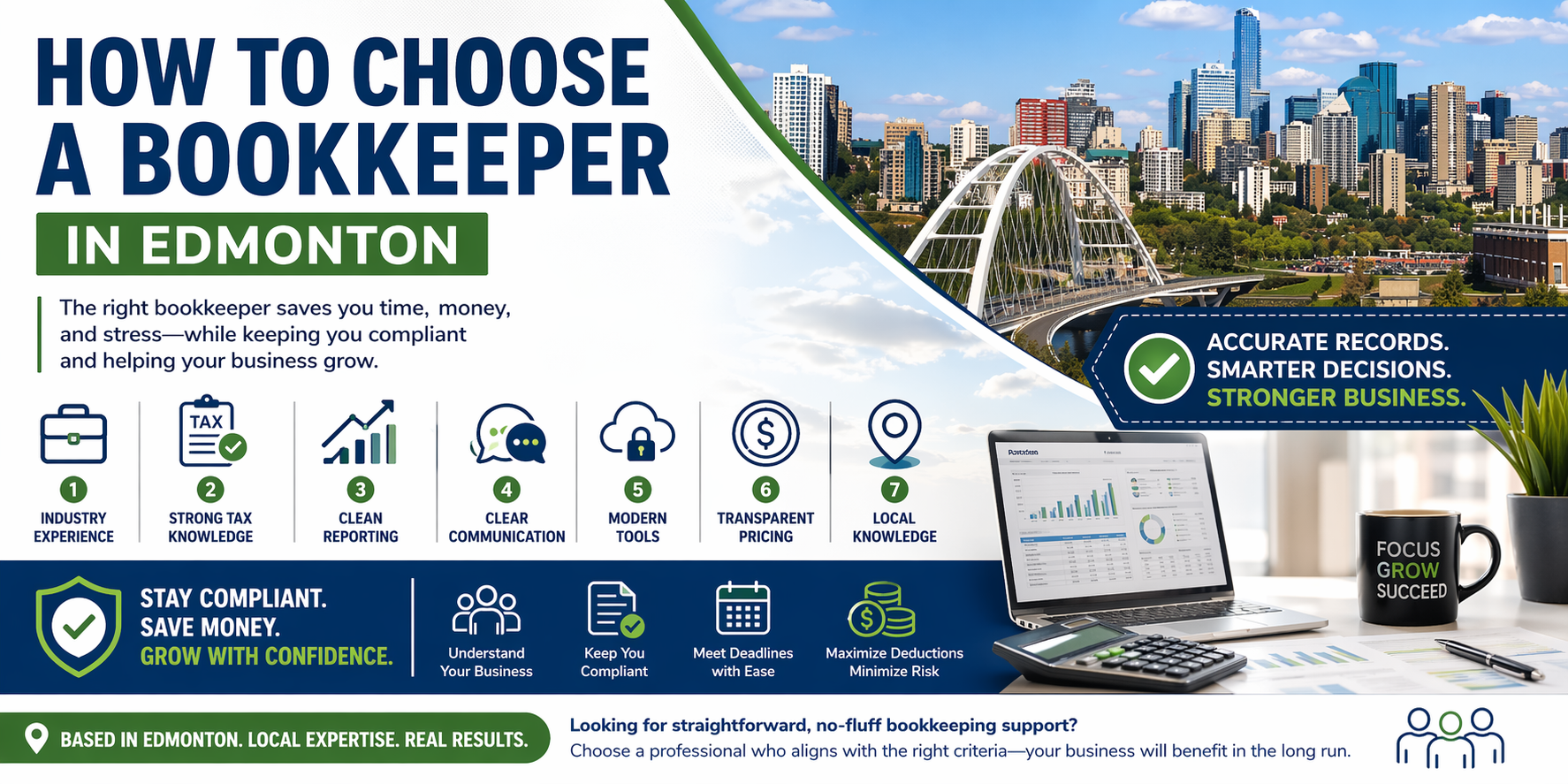
Choosing the right bookkeeper in Edmonton can save you time, money, and a great deal of stress especially with evolving CRA requirements and the unique complexities of local businesses. Not all bookkeeping services are created equal, so it’s important to know what truly matters when making your choice.
1. Experience in Your Industry
Bookkeeping isn’t one-size-fits-all. A bookkeeper with experience in your specific industry will already understand common expense categories, GST treatment, and payroll nuances relevant to your business. This means less time spent explaining the basics and fewer costly mistakes.
Industries where specialized experience is especially valuable:
- Construction
- Automotive
- Restaurants
- Oil & Gas Contractors
- Real Estate
In a city like Edmonton, industry-specific expertise often matters more than general bookkeeping knowledge. A bookkeeper who has worked with businesses similar to yours can identify potential issues early and help you stay ahead of them.
2. Strong Understanding of Canadian Tax Rules
This is non-negotiable. Your bookkeeper must be well-versed in Canadian tax requirements especially when it comes to GST/HST, payroll, and CRA compliance. General accounting knowledge isn’t enough; they need practical, working experience with real filings and deadlines.
Key areas they should confidently handle:
- GST/HST filings — monthly, quarterly, or annually, depending on your revenue
- Payroll remittances and T4 preparation
- Use of CRA My Business Account and online filing systems
- Familiarity with Alberta-specific requirements, such as WCB and provincial payroll considerations
A simple way to assess their expertise is to ask:
“How do you handle GST and payroll filings for Edmonton businesses?”
If the response is hesitant or vague, consider it a red flag. These are fundamental responsibilities not advanced or optional skills.
3. Clean and Organized Financial Reporting
Good bookkeeping goes beyond simple data entry. You should receive clear, consistent financial reports that help you understand and confidently run your business.
What to expect from quality reporting:
- Monthly Profit & Loss statements and Balance Sheets that are easy to read and interpret
- Accurately categorized expenses (avoiding vague “miscellaneous” entries)
- Fully reconciled bank and credit card accounts every month
If your reports are disorganized, your tax filings and business decisions will likely suffer as well. Always ask to see a sample report before committing what you see there is usually what you’ll get going forward.
4. Communication and Responsiveness
Poor communication is one of the most common frustrations business owners in Edmonton have with their bookkeepers. Before hiring, pay close attention to how quickly and clearly they respond is often a reliable indicator of what working with them will be like long-term.
Signs of strong communication:
- Timely responses — typically within 1–2 business days
- Clear explanations — using plain language instead of accounting jargon
- Proactive updates — identifying and addressing issues before you have to ask
If someone is difficult to reach or slow to respond during the initial conversation, it’s unlikely to improve once you’ve signed on.
5. Use of Modern Tools
Manual, paper-based bookkeeping has no place in 2026. A reliable bookkeeper should use modern, cloud-based tools that give you real-time visibility into your financial data and streamline day-to-day processes.
What to look for:
- Cloud accounting software such as QuickBooks Online or Xero
- Automated bank feeds to reduce manual entry and minimize errors
- Secure digital document sharing instead of relying on email attachments
- Remote access so you can review your financials anytime, from anywhere
Using the right tools doesn’t just improve accuracy, it also makes collaboration faster, safer, and far more convenient.
6. Transparent Pricing
Bookkeeping fees in Edmonton can vary significantly, so it’s essential to understand exactly what you’re paying for before committing. Clear, upfront pricing helps you avoid unexpected costs and ensures both sides are aligned on expectations.
Common pricing models:
- Monthly flat fee
- Hourly rate
- Per return or per task
What you should clarify in advance:
- What’s included in the base price
- What services cost extra (e.g., year-end work, tax preparation, catch-up bookkeeping)
- Whether there is a written engagement letter outlining the scope of work
Vague pricing often leads to surprises on your invoice. Always make sure the full scope and all potential costs are clearly documented in writing.
7. Local Knowledge Matters
A bookkeeper who understands the Edmonton business landscape brings added value beyond basic number-crunching. They’re more likely to be familiar with local industries, Alberta-specific compliance requirements, and the day-to-day realities of operating in this region.
When evaluating a potential bookkeeper, ask:
- Do they currently work with businesses in your sector?
- Can they point to specific challenges they’ve handled for similar clients?
Practical, local experience often translates into better advice and fewer compliance issues.
Final Thoughts
Choosing a bookkeeper in Edmonton isn’t just about cost, it’s about finding someone who understands your business, maintains accurate records, and keeps you compliant with tax regulations. The right choice can save you thousands in errors, penalties, and missed deductions.
A strong bookkeeper should:
- Understand your industry and its CRA requirements
- Communicate clearly and respond promptly
- Provide clean, fully reconciled monthly reports
- Use modern cloud-based tools with transparent pricing
If you’re unsure whether your current bookkeeping setup is working as it should, getting a second opinion before year-end can be a smart move.
Looking for straightforward, no-fluff bookkeeping services in Edmonton? Get in touch today for a free, no-obligation quote.